
There are roughly two hundred listings in this category and about six meaningfully different products behind them. Frames get rebadged, motors get sourced from the same handful of suppliers, and the marketing photography is frequently the same render with a different logo. What actually varies and what decides whether you are happy in year eight comes down to five specifications.
This page ranks six configurations against those five specs. Every score below is a spec score, derived from published engineering figures and warranty terms, not a star rating invented after an afternoon in someone’s backyard. Where we have not tested something, we say so.
60-Second Match Finder
Which Louvered Pergola Configuration Is Actually Yours?
Five questions on footprint, climate, budget and who is holding the drill. No email, no signup — the result appears on this page.
Question 1 of 5
Your Match
The Five Specs That Actually Decide This
Before the rankings, it is worth being precise about what is being ranked, because almost every product page in this category leads with the wrong things.
1. Alloy grade, not “aluminum”
6063-T5 and 6063-T6 are the extruded architectural grades this category is built on. T6 is heat-treated further and is stiffer, which matters on spans over about 14 feet. A listing that says only “high-quality aluminum” is usually hiding wall thickness, the dimension that decides whether the header beam deflects under a closed, water-loaded louver bank.
2. Wind rating, with the loaded condition stated
A published rating is meaningless unless it says whether it applies with louvers open or closed. Closed is the loaded condition: that is when the roof becomes a solid surface for wind to push against. Residential frames in this category run from about 90 mph at the entry level to 165 mph on coastal builds. Full explanation of how to read these numbers here.
3. Motor warranty, separately from frame warranty
This is the single most predictive number on the whole spec sheet. The frame is aluminum; it is not the part that fails. The motor, its controller, and its limit switches are. A ten-year frame warranty paired with a one-year motor warranty is a manufacturer telling you, in writing, which component they expect to replace.
4. IP rating on the electronics
IP54 is the realistic floor for a sheltered motor housing; IP65 for anything exposed at the roofline. No stated rating means no tested seal, and a motor that ingests water in year two is a repair that costs a meaningful fraction of the original kit.
5. Whether an engineering letter exists
Ask before you order, not after. Plenty of buyers get a structure delivered and then discover their county wants a stamped wind-load calculation that the manufacturer cannot produce. That is the failure mode that turns a pergola into an expensive tarpaulin frame in a side yard.
The Ranked Picks
Ranked by spec score, which weights build quality, usable coverage, automation and value equally. These are the specific machines we can verify are in stock right now, with the prices the manufacturers are actually charging — not market ranges.
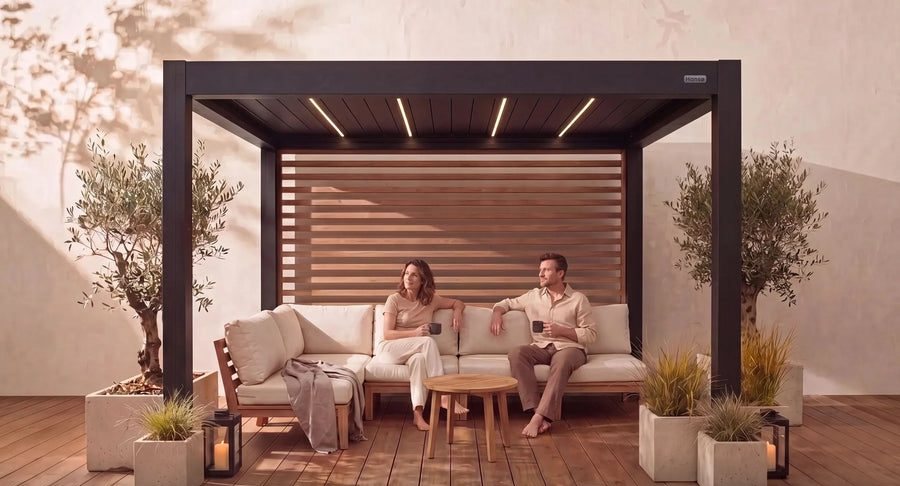
Hansø Apex Pergola
The one to buy if the pergola has to survive a hurricane and still look like architecture.
- Footprint
- 10 × 10 ft up to 26 ft spans
- Wind rating
- 167 mph — Cat 5 certified, louvers closed
- Snow load
- 65 PSF
- Frame
- T6 aerospace aluminium, 40% more material than Horizon
- Louvers
- AeroCore Pro dual-chamber, rubber-sealed watertight
- Control
- Motorised, remote + app + smart home
- Price
- $11,950 – $27,950
Best for: A coastal, storm-exposed or heavy-snow property where the structure has to be permanent and the failure mode is unacceptable.
What it gets right
- Highest certified wind rating on this page
- Genuinely watertight louvers, not just "rain resistant"
- Stainless baseplates — the right call within a mile of salt water
What to watch
- Never discounted
- Overkill inland if you are not in a storm or snow zone
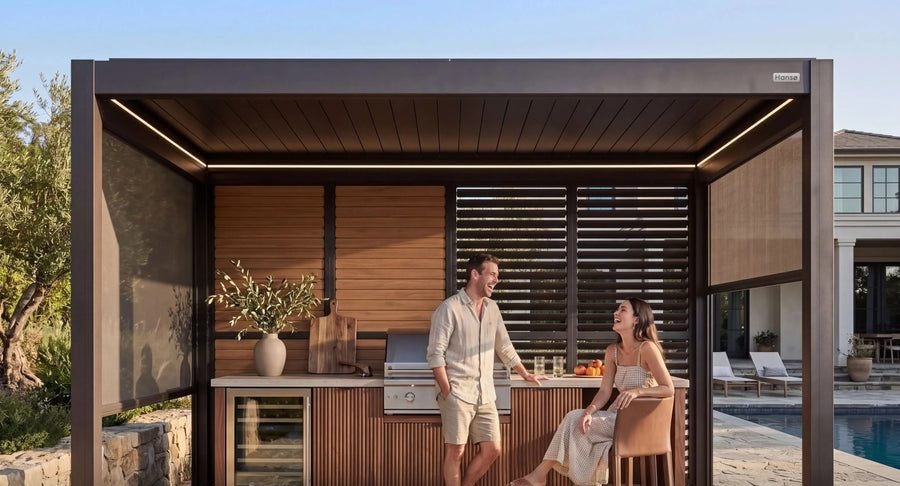
Hansø Horizon Smart Pergola
Cat 5 rating and app control at roughly a third of the flagship price.
- Footprint
- 10 × 10 ft up to 23 ft spans
- Wind rating
- 165 mph — Cat 5 certified
- Snow load
- 60 PSF
- Frame
- T6 aerospace aluminium
- Louvers
- Double-layer with vibration dampeners
- Control
- Motorised, remote + app + smart home
- Price
- $4,867 – $11,204
Best for: The buyer who wants a certified Cat 5 structure and app control without paying flagship money.
What it gets right
- Same 10-year warranty and coating as the flagship
- Double-layer louvers kill the rattle cheap units have
- Sits right in the real-world budget for a motorised 10×13
What to watch
- Lighter frame than Apex
- Not the pick if you are oceanfront
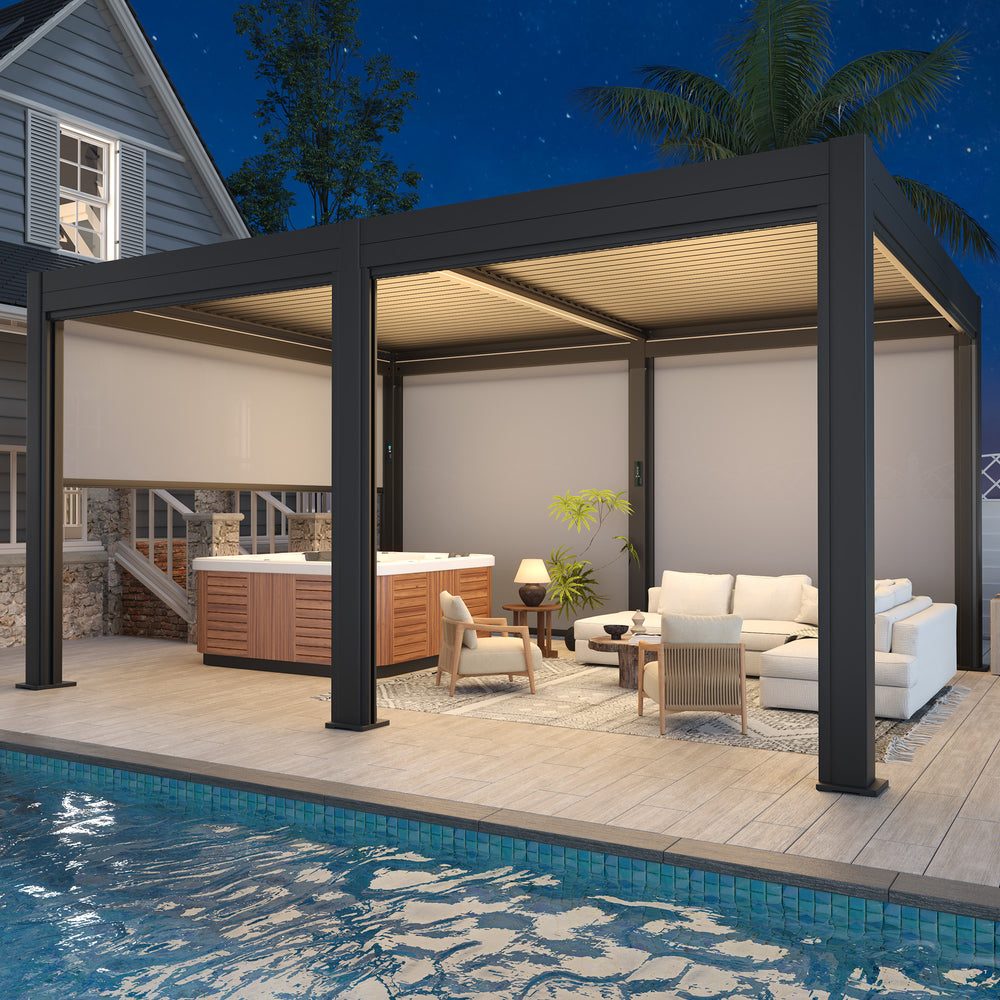
EROMMY 12×16 Motorized Louvered Pergola
Motorised roof plus six powered side screens and integrated LEDs, for the price of a manual flagship.
- Footprint
- 12 × 16 ft — 192 sq ft
- Roof
- Motorised louvers, 0–90°, remote or wall panel
- Screens
- 6 powered side screens included
- Lighting
- Built-in LED, 12 colours, 3 brightness levels
- Power
- Solar-assisted dual supply with USB charging ports
- Control
- Motorised roof + 6 powered screens
- Price
- $6,599.99
Best for: A six-seat dining table plus a lounge zone, in a normal wind region, with screens included instead of quoted separately.
What it gets right
- Roof and side screens both motorised — most rivals charge extra for screens
- Lighting and USB power already built in
- Covers a six-seat table plus a lounge zone
What to watch
- No published engineered wind rating
- Freight delivery and a real footing job
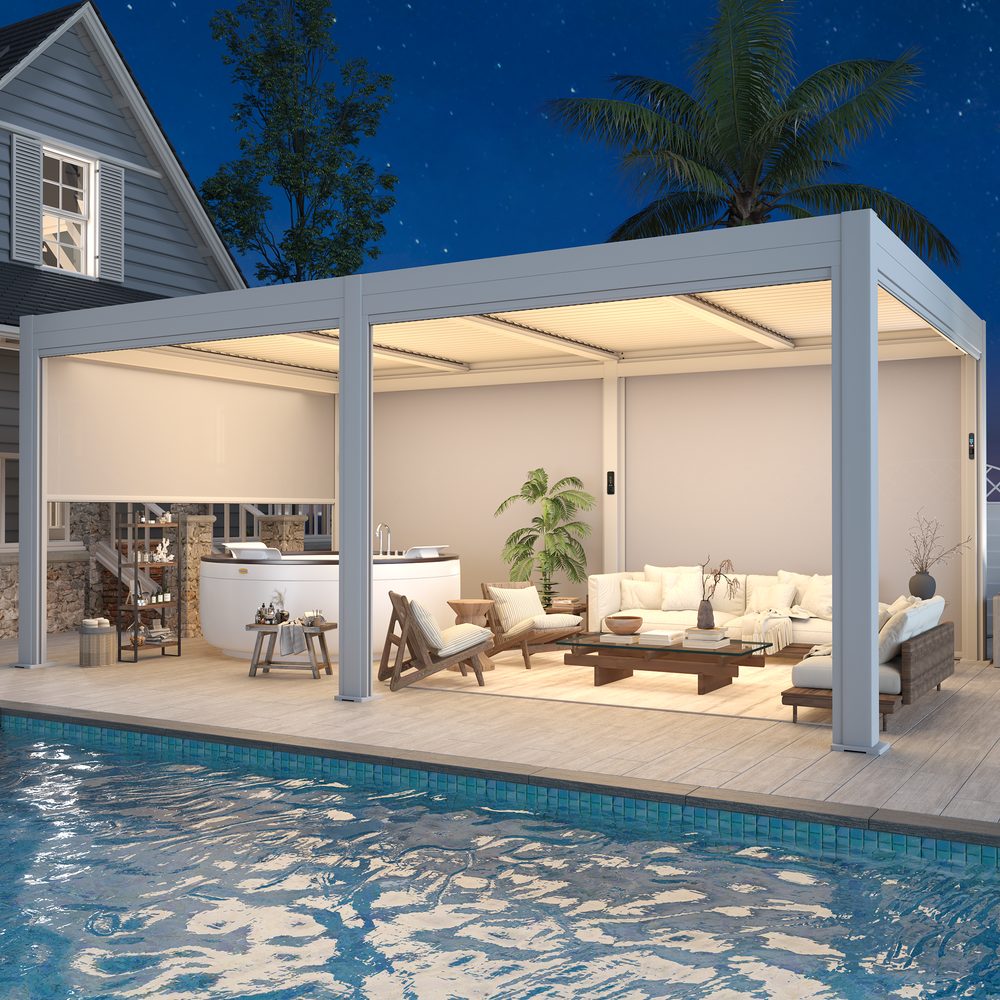
EROMMY 12×20 Freestanding Louvered Pergola
240 sq ft of adjustable louvered roof on four independent posts — nothing bolted to the house.
- Footprint
- 12 × 20 ft — 240 sq ft
- Roof
- Hand-adjustable aluminium louvers
- Frame
- Powder-coated aluminium, freestanding
- Drainage
- Integrated post channels
- Control
- Sectioned motorised roof + 6 screens
- Price
- $7,299.99
Best for: Entertaining. Dining at one end, seating at the other, and louvers you can drive in sections so both zones are right at once.
What it gets right
- True freestanding build — no ledger board, no wall required
- Louvers close to a watertight roof and route rain down the posts
- Dark grey powder coat resists chipping and UV fade
What to watch
- No published engineered wind rating
- Needs a genuinely flat 12×20 pad
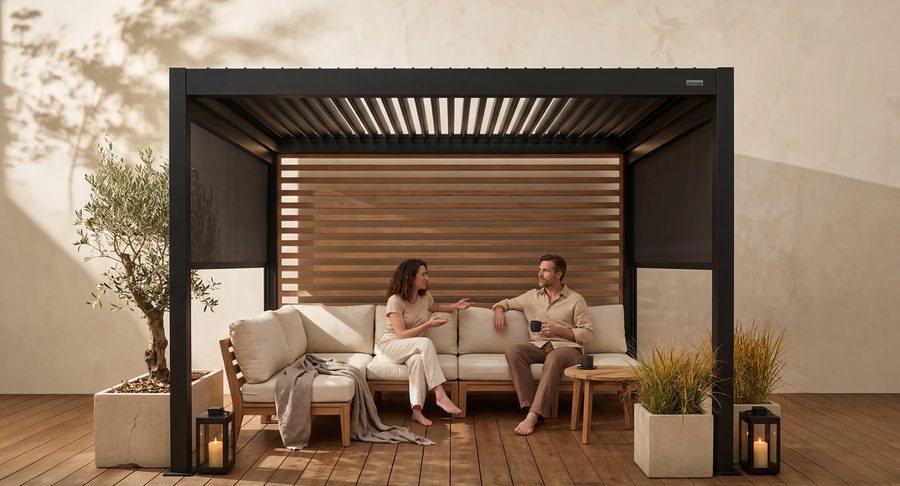
Hansø Aluminum Pergola Kit
Hand-crank louvers, 120 mph rating, no motor to ever fail.
- Footprint
- 10 × 10 ft up to 23 ft spans
- Wind rating
- 120 mph — Cat 3, independently certified
- Snow load
- 25 PSF
- Frame
- 6063-T5 aluminium, TitanCore bracing
- Louvers
- WindLock mounting, 65% less rattle
- Control
- Manual crank
- Price
- $3,978 – $8,658
Best for: Anyone who does not want an electrical system living outdoors for the next thirty years.
What it gets right
- Nothing electrical to fail in year eight
- Strongest wind rating in the manual category
- Cheapest route into a real louvered roof from this brand
What to watch
- No app, no rain sensor
- 25 PSF snow load is the limit in heavy-snow states
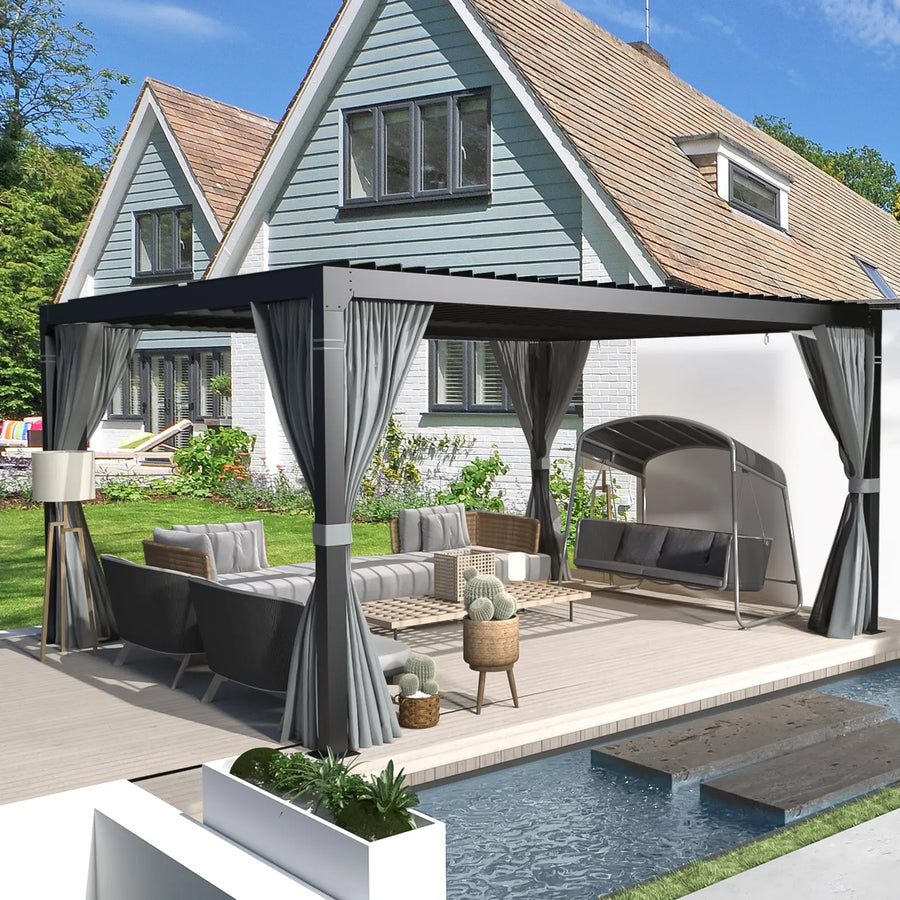
EROMMY 10×20 Louvered Hardtop Pergola
The cheapest honest way into a real louvered roof — 200 sq ft with integrated drainage.
- Footprint
- 10 × 12 ft — 120 sq ft
- Roof
- Adjustable aluminium louvers
- Frame
- Rustproof powder-coated aluminium
- Drainage
- Integrated gutter and post channels
- Control
- Manual louvers
- Price
- $1,299.99
Best for: A first louvered roof over a patio table, on a budget that does not stretch to a four-figure motor.
What it gets right
- Real adjustable louvers, not a fixed hardtop
- Integrated drainage instead of sheeting water off the edge
- Lowest entry price of any in-stock louvered pergola in the range
What to watch
- No published engineered wind rating
- Manual only, and a single fixed size
Compare Everything Side by Side
Filter by what you can actually spend and what your lot actually needs. The wind filter is the one to use first; there is no point falling in love with a configuration you cannot permit.
| Model | Footprint | Wind | Control | Motor warranty | Typical price | Score | Link |
|---|---|---|---|---|---|---|---|
| Hansø Apex PergolaBest Overall | 10 × 10 ft up to 26 ft spans | 167 mph | Motorised, remote + app + smart home | Frame & motor 10 yr | $11,950 – $27,950 | 9.2 | Price |
| Hansø Horizon Smart PergolaBest Smart Pergola | 10 × 10 ft up to 23 ft spans | 165 mph | Motorised, remote + app + smart home | Frame & motor 10 yr | $4,867 – $11,204 | 9.1 | Price |
| EROMMY 12×16 Motorized Louvered PergolaBest Value Motorized | 12 × 16 ft — 192 sq ft | Not published | Motorised roof + 6 powered screens | Manufacturer standard | $6,599.99 | 9.0 | Price |
| EROMMY 12×20 Freestanding Louvered PergolaBest for Big Spaces | 12 × 20 ft — 240 sq ft | Not published | Sectioned motorised roof + 6 screens | Manufacturer standard | $7,299.99 | 8.9 | Price |
| Hansø Aluminum Pergola KitBest Manual Kit | 10 × 10 ft up to 23 ft spans | 120 mph | Manual crank | Frame 10 yr | $3,978 – $8,658 | 8.0 | Price |
| EROMMY 10×20 Louvered Hardtop PergolaBest Under $1,500 | 10 × 12 ft — 120 sq ft | Not published | Manual louvers | Manufacturer standard | $1,299.99 | 7.3 | Price |
Nothing matches those filters. Widen the budget or drop the wind requirement.
Prices are the manufacturers’ current listed prices for the configuration shown, checked against their own storefronts. Larger sizes and options cost more — confirm the exact spec sheet and final price with the retailer before ordering. We earn a commission on purchases made through the links above, at no cost to you.
Verify Before You Buy
Whichever configuration you land on, run the listing through this before you put money down. Every item is something you should be able to answer from the product page. Anything you cannot answer is the question to send the seller, and how fast they answer it tells you a lot about the support you will get in year three.
Before You Buy
The 7-Point Spec Sheet Check
Tick each one off against the listing you are looking at. If you cannot answer it from the product page, that is the question to send the seller.
0 of 7 verified
All seven verified. That is a spec sheet worth buying from — go and confirm current pricing and stock.
Check Current PriceWhat We Deliberately Did Not Rank On
A short note on the method, because it explains some absences.
- Customer review averages. The volume in this category is too low and too easily manipulated for a star average to carry information. A 4.7 from 31 reviews tells you nothing useful about a structure with a twenty-year design life.
- Brand name. A meaningful share of listings are the same extrusion from the same factory under different labels. Specifications survive rebadging; brand loyalty does not.
- Included “smart” features. App control is pleasant and almost never the thing that breaks or the thing you regret. Rain sensing is genuinely useful. Voice assistant integration is a rounding error on a purchase this size.
- Color options. Real, but not a ranking factor. Every serious manufacturer offers bronze, black, white, and a sand tone.
Frequently Asked Before Buying
Common Questions
Buying Questions
Usually yes. Most jurisdictions trigger a permit on footprint, height, permanent footings, or any fixed electrical run — and a motorized pergola normally hits at least two of those. Check your local code before you order, and confirm the manufacturer can supply a wind-load engineering letter, because a permit office that asks for one will not accept a marketing brochure instead.
It depends entirely on the published engineering rating, not the material. Residential aluminum louvered pergolas commonly rate between 90 and 165 mph, and manufacturers specify whether louvers should be closed and locked or rotated open during a storm. For snow, the correct move on most systems is to open the louvers so accumulation falls through instead of loading a flat slat roof.
A small moisture sensor wired to the control unit signals the motor to rotate the louvers closed the moment it detects rainfall, whether or not anyone is home. It is not standard equipment on every model — on mid-tier units it is frequently an add-on module, so confirm it is included rather than assuming.
Freestanding kits are meaningfully more DIY-friendly than wall-mounted ones because there is no ledger board to flash into your siding. That said, squaring a structure this size, setting or bolting four footings, and wiring a motor is a two-person, full-day job at minimum. A common split is DIY frame assembly plus a licensed electrician for the final hookup.
Most systems include either a manual override crank or a battery-backed remote, but this varies by brand and is one of the least advertised specs in the category. If you live somewhere that loses power in the same storms that make you want the louvers closed, treat manual override as a requirement rather than a nice-to-have.
Entry-level 10×10 kits start around $2,000–$3,500. Mid-size motorized units commonly land between $3,500 and $6,500. Large-format or fully-loaded builds with heaters, lighting and screens run $7,000–$12,000 and up. Installation, footings and electrical are usually quoted separately.
A retractable canopy slides a fabric cover along a track. A louvered pergola rotates solid aluminum slats on a hinge, typically through about 0–170 degrees. That gives finer control over light and airflow, and it removes the consumable part — there is no fabric to fade, tear or replace on a roughly seven-to-ten-year cycle.